
What is the difference between 304 and 316 stainless steel
2026-06-12
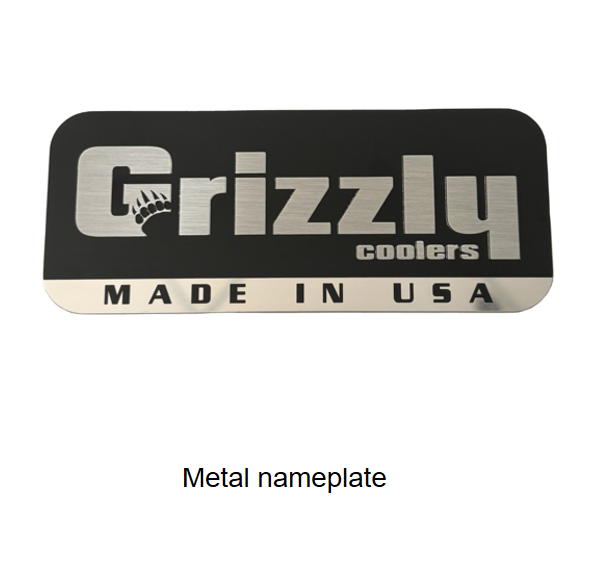
304 and 316 stainless steel are the two dominant materials for custom metal nameplates, logos and industrial signage. Selecting the wrong grade commonly causes rust, discoloration, faded engraving and shorter service life. This article summarizes their core differences and provides a clear scenario-based selection guide for nameplate manufacturing to balance durability and cost-effectiveness.
Core Differences Between 304 and 316 Stainless Steel
1. Material Composition & Corrosion Resistance
Core Differences
304 and 316 are both common stainless steel grades for metal nameplates, with their performance gap mainly coming from material composition. As a standard 18-8 stainless steel, 304 contains only chromium and nickel, delivering basic rust resistance suitable for regular environments. In comparison, 316 adds 2%–3% molybdenum based on the 304 formula. This special alloy element greatly improves resistance to chloride, salt spray, acid, alkali and high humidity. Therefore, 304 works stably in dry indoor conditions but tends to rust and fade in coastal, humid or chemical-exposed scenarios, while 316 remains intact and keeps clear markings even in harsh corrosive environments.
304 Stainless Steel
304 is a standard 18-8 austenitic stainless steel consisting of 18% chromium and 8% nickel with no additional alloy elements. It offers reliable basic rust resistance, good ductility and excellent processability. Easy to etch, bend and polish, 304 is affordable and widely used for standard decorative and industrial nameplates.

2. Processability & Cost Difference
Overall Comparison
Both 304 and 316 are fully compatible with mainstream nameplate manufacturing processes, including laser engraving, chemical etching, bending and polishing. 304 is softer and easier to machine with higher production yield, while 316 has slightly higher hardness with negligible impact on daily custom production. In terms of cost, 304 features high cost performance and is ideal for mass production. Due to the extra molybdenum ingredient and complex smelting process, 316 is 15%–30% more expensive, so it is only used for high-standard corrosion-resistant nameplate projects.
Processing Performance
Both grades support common nameplate manufacturing processes, including laser engraving, chemical etching, bending and polishing. 304 is softer and easier to machine with higher production yield. Although 316 is slightly harder, the processing difference is minimal and fully acceptable for regular custom nameplate production.
Why Proper Material Selection Matters for Nameplates
Stainless steel nameplates undertake brand display and equipment identification functions. Unreasonable material matching will cause practical problems: using standard 304 nameplates in corrosive environments leads to rust, discoloration and blurry engraving, damaging product and brand image; in contrast, blindly adopting high-cost 316 for ordinary indoor dry environments causes unnecessary cost waste. Reasonable selection effectively balances appearance durability, practical performance and production cost.
Stainless steel nameplates serve for brand display and equipment identification. Improper selection leads to two typical problems: using 304 in corrosive environments causes rust and blurry markings that ruin brand image; blindly using high-priced 316 for indoor dry scenarios results in unnecessary cost waste. Correct material matching balances cost, visual appearance and long-term durability.

Scenario-Based Material Selection Guide
1. 304 Stainless Steel Nameplates (General Use)
Applicable Scenarios
Thanks to its stable basic performance and affordable price, 304 stainless steel is the preferred material for indoor and dry non-corrosive scenarios. It is widely used for nameplates of household appliances, smart devices, office equipment, furniture hardware, indoor signage and conventional indoor mechanical equipment. It can maintain long-term clear markings and stable surface condition in normal atmospheric environments with optimal cost performance.
Suitable Application Scenarios
304 is the ideal cost-effective choice for all indoor and dry non-corrosive environments. It is widely applied to household appliances, smart devices, office equipment, furniture hardware, indoor signage and conventional indoor mechanical equipment. In normal atmospheric conditions, 304 maintains stable performance and clear markings with minimum cost.
2. 316 Stainless Steel Nameplates (High-End Corrosion-Resistant Use)
Applicable Scenarios
Benefiting from molybdenum-enhanced corrosion resistance, 316 stainless steel is specially applied to high-humidity, salty and chemical-corrosive scenarios that require long-term service life. It is suitable for outdoor exposed facilities, coastal and marine equipment, medical devices, food processing machinery, chemical industry equipment and high-humidity workshop signage. It effectively resists salt spray, rain erosion, disinfectant cleaning and chemical contamination to keep nameplates durable and intact.
Suitable Application Scenarios
316 is used for high-standard, high-corrosion scenarios requiring long-term stability. It is perfect for outdoor exposed facilities, coastal and marine equipment, medical devices, food processing machinery, chemical industry equipment and high-humidity workshop signage. It reliably resists salt spray, chemical erosion and frequent cleaning to keep nameplates intact for years.
Final Summary
In short, the core difference between 304 and 316 stainless steel is the molybdenum additive in 316, which delivers stronger anti-corrosion and anti-chloride ability. For nameplate manufacturing, 304 is the cost-effective option for indoor, dry and conventional scenarios, while 316 is the professional choice for outdoor, coastal, humid, medical and chemical environments. Accurate material selection ensures stable product quality, neat appearance and reasonable cost control.
What Are Self-Adhesive Labels
does epoxy stick to glass
Related Article

When shopping for office, hotel, school, or business branding supplies, one of the most common questions is: How much are name plates? Many people assume custom name plates are expensive, exclusive luxury items with high customization fees and complicated pricing rules
How Much Are Name Plates

Crystal clear epoxy resin is one of the most practical surface finishing materials for commercial labels, brand stickers, and metal/plastic nameplates.
Benefits of Crystal Clear Epoxy on Nameplates